

In 1921, as part of his Mountain Interval collection, Robert Frost published a poem called “The Oven Bird.” Fourteen lines long and written in Frost’s accessible, conversational style, it chronicles the beginning of autumn through the oven bird’s song—the changing leaves, the end of the high-summer flowers, the “highway dust that covers all”:
He says the early petal-fall is past
When pear and cherry bloom went down in showers
On sunny days a moment overcast;
And comes that other fall we name the fall.
The oven bird, a little warbler, is most at home in leaf litter—the crunchy, dead leaves that cover the ground and are eventually absorbed into the earth. In the poem’s poignant final lines, Frost reflects on these dichotomies, using the oven bird’s song as a question that may not have an answer.
“The question that he frames in all but words,” Frost writes, “is what to make of a diminished thing.”
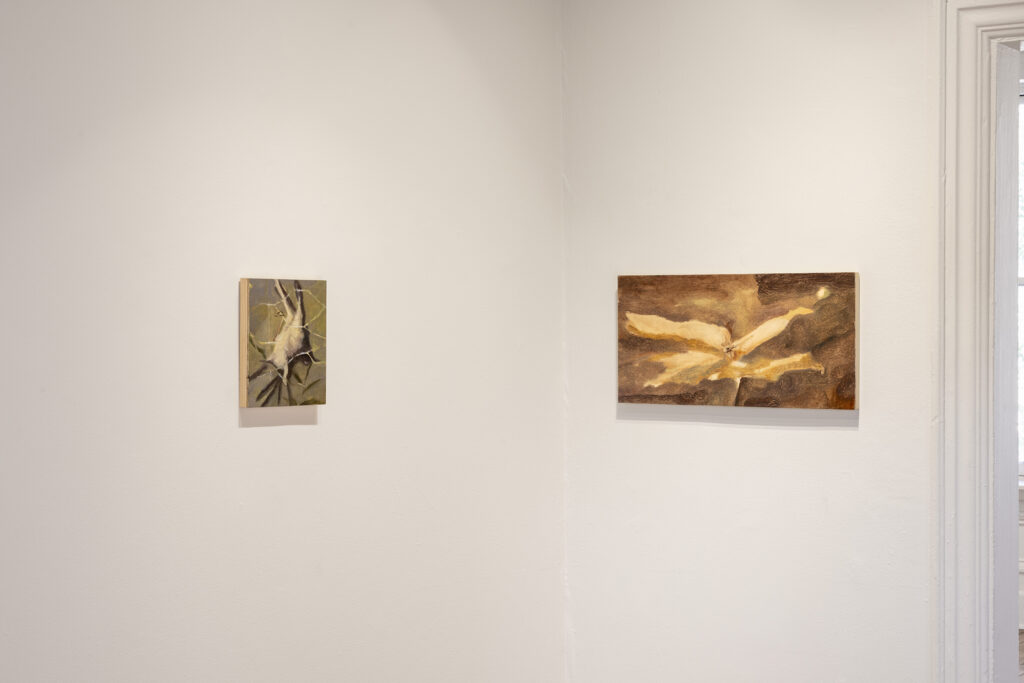
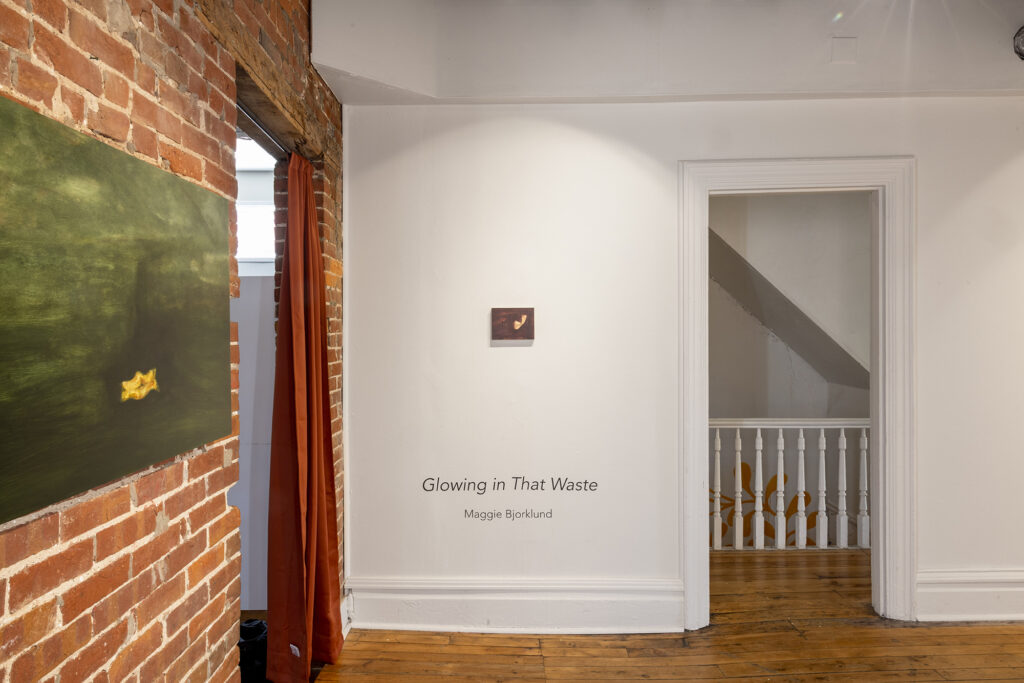
“The Oven Bird”—particularly those last lines—was on my mind as I made my way through the 21 pieces in Maggie Bjorklund’s exhibition, Glowing in That Waste. Borrowing her title from a line in Cormac McCarthy’s The Road, Bjorklund explores the process and necessity of natural decay through overwintered flora and fauna, including flowers, leaves, seeds and, perhaps most affectingly, a triptych chronicling the decomposition of a deer.
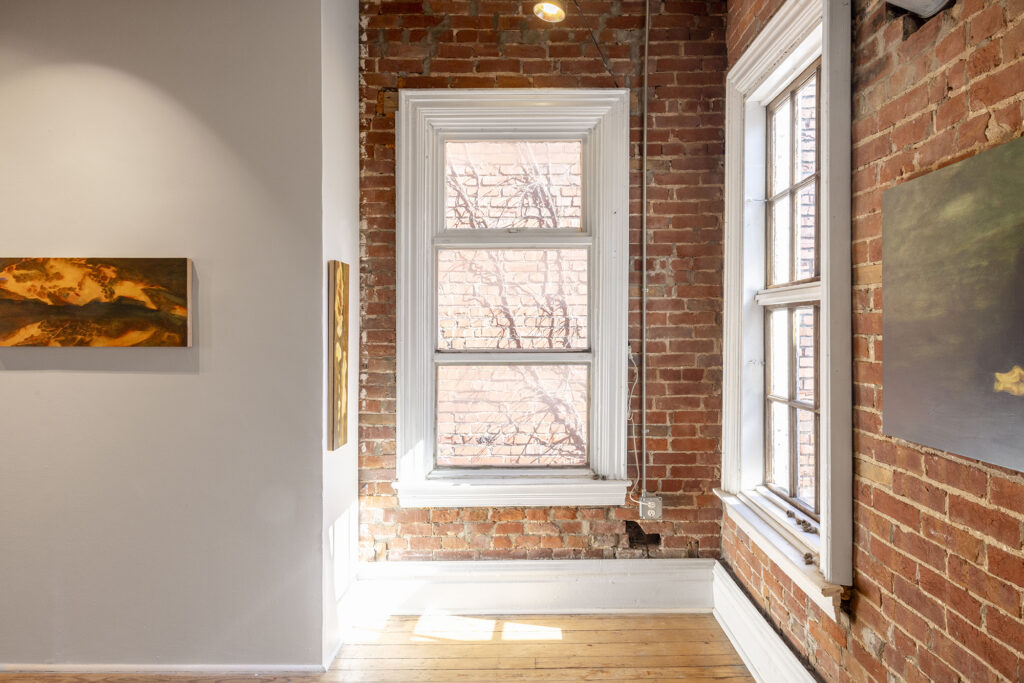
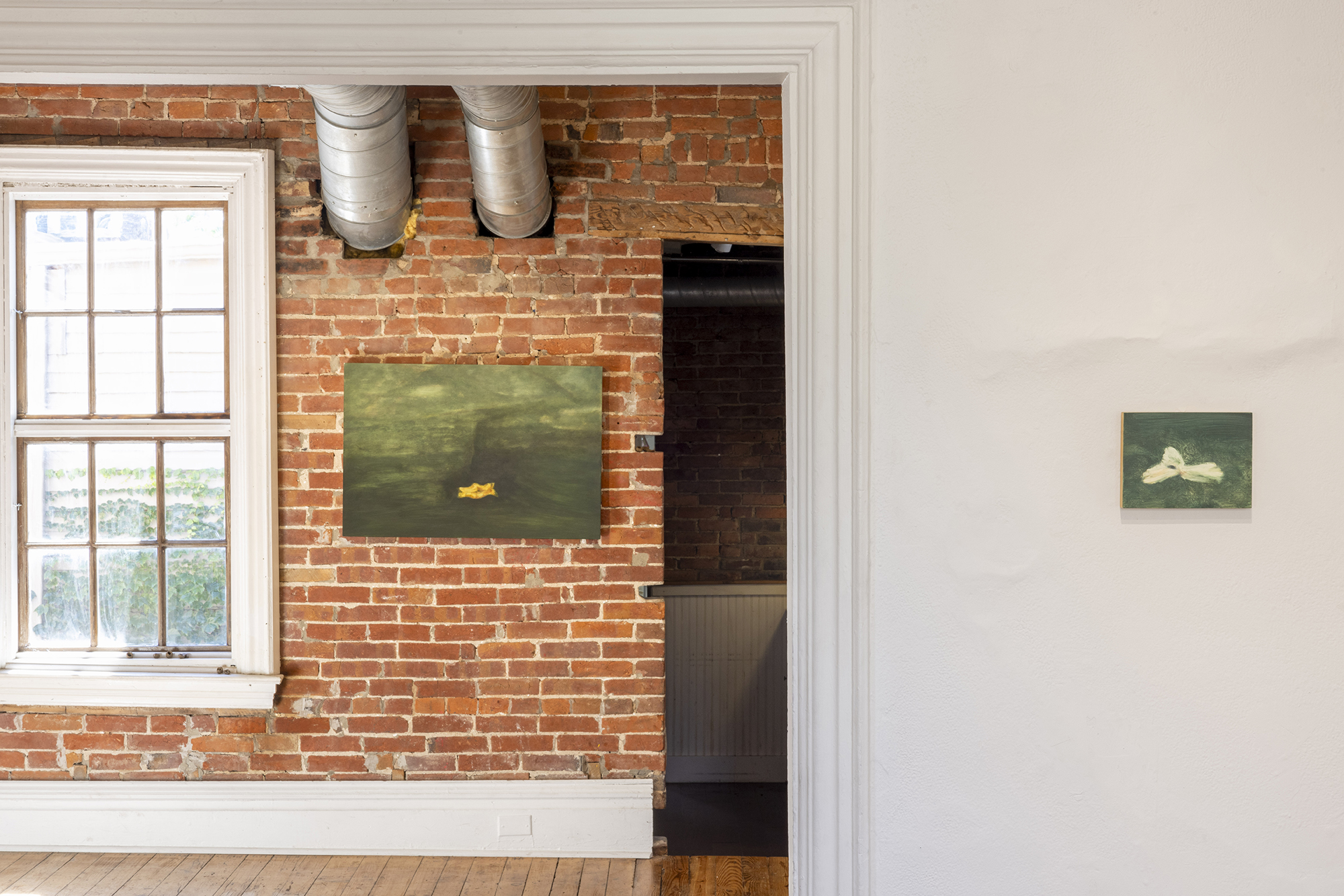
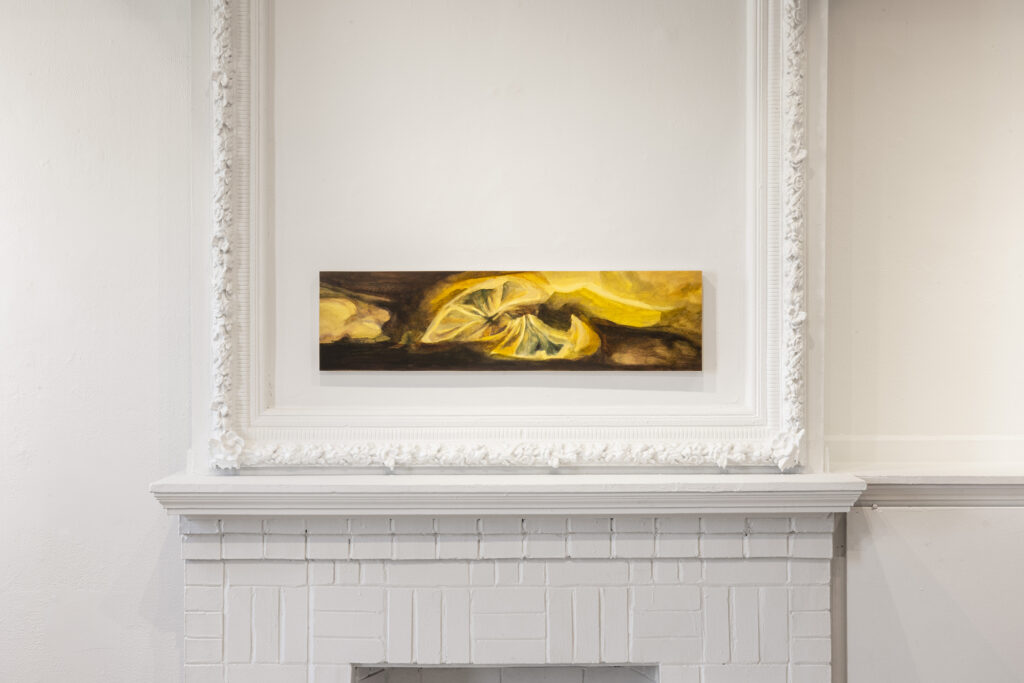
Bjorklund’s exhibit feels especially right for this moment. The dark, jewel-toned colors in her oil paintings—rich emeralds, burgundies, browns and yellows—are fall-like, reflecting both her subject matter and October’s shorter days and cooler nights. The brushstrokes in her Moth in Threshold series, as well as Abideth Alone, offer that same sense of transition and urgency, while in paintings like Stereum on Driveway Twig and Echinacea in October, they mirror the plants’ drooping, downward decay.
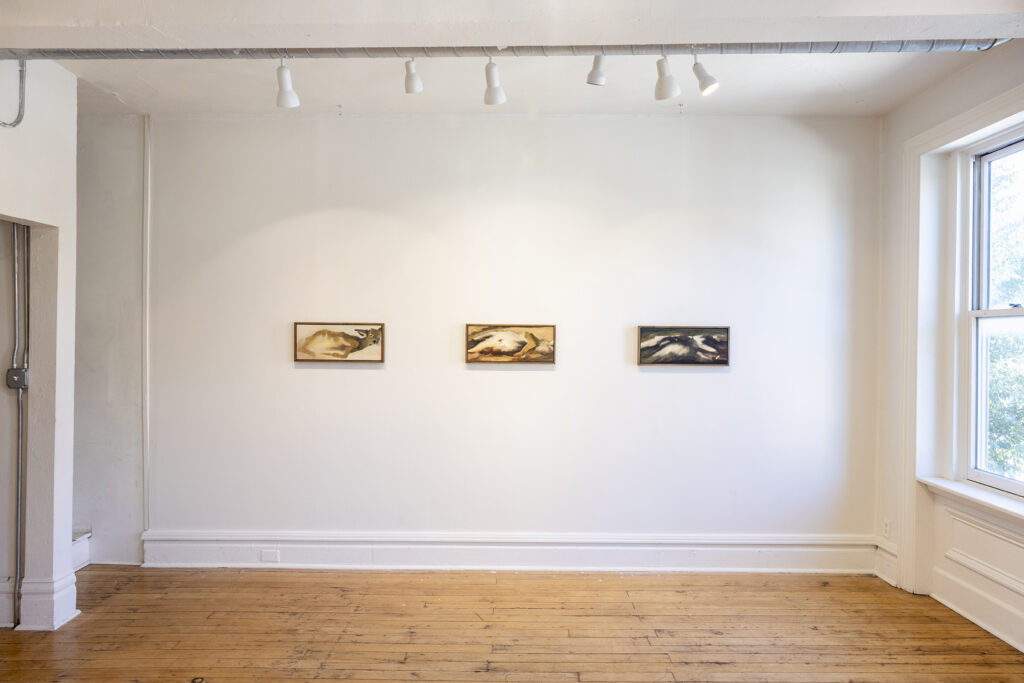
In Doe in the Yard I–III, Bjorklund memorializes a deer who died under the hemlock trees in her yard. She watched as other deer visited the doe in its final days, the animals’ own private vigil. After the deer’s death, Bjorklund relocated it to the woods behind her house, observing its decay until only bones remained. The result is three moving panels showing different stages of decomposition.
Bjorklund’s respect for the animal is evident, and again, it comes through in the way she uses paint: the curve of the doe’s arm and the arc of its closed eyes in the first painting; the softness of its belly in the second; and the sense of expansion in the third, when, aside from its bones, the deer’s form has otherwise transcended the physical world.
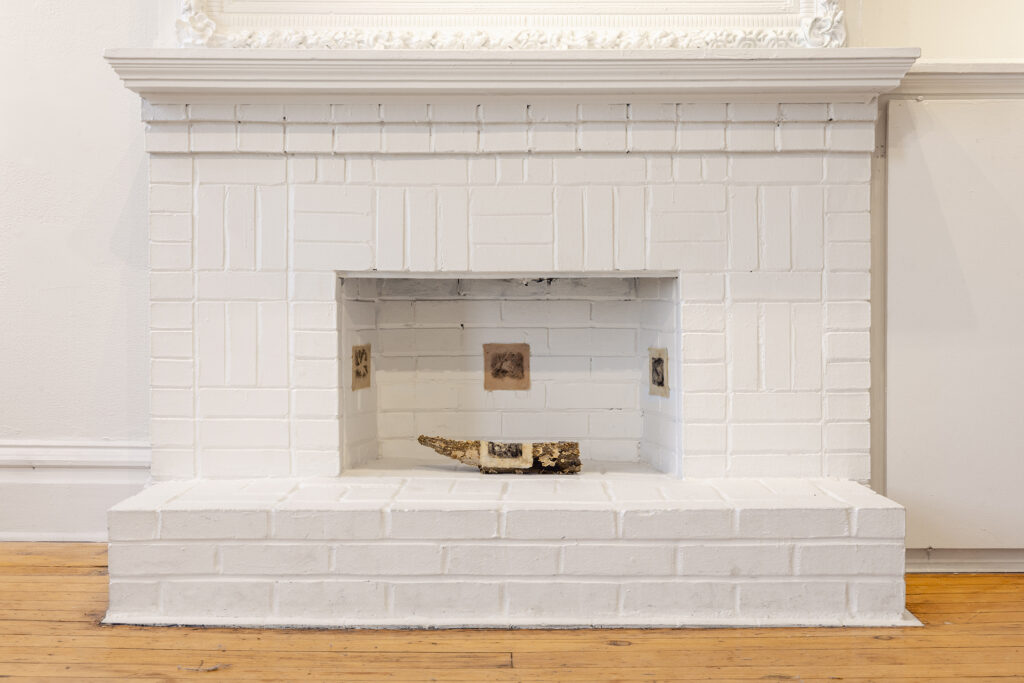
Taking it one step farther, this summer Bjorklund gathered the doe’s remaining bones and charred them in a wood-burning stove, then used them to make black oil paint. Applied to three pieces of cotton muslin—along with pigment created with other natural waste—and situated in Bunker Projects’ fireplace directly across from the triptych of the doe, these monotypes are in conversation with both of the mediums that created them.
Decay and decomposition have also been themes of 2026. Collectively, we’ve watched the degradation of our social safety nets, from welfare benefits to immigrant protections to funding for the arts, humanities, science, medicine and more. And individually, so many of us have experienced deep loss. In late January, at the height of a snowstorm, I held my best friend’s hand as he took his last breaths—his body, riddled with cancer, in its final physical form after months of decay. After his body was taken from his home, he was cremated; the ultimate act of decomposition. This spring, at the pond where he faithfully walked until he couldn’t anymore, we dedicated a tree in his name. It’s been a lesson in life and death, decomposition and recomposition, to watch it flower, leaf, shed and go dormant.
I thought about all of that as I walked through Bjorklund’s show, which feels like both an antidote and a reminder. Everything changes, but change is constant. The breakdown of one form (of life, of matter, even of mindset) can lead to another. Death is everywhere, but so is beauty.
If the oven bird’s question is, “What to make of a diminished thing?,” sometimes—as Glowing in That Waste bears out—the answer is art.
Photography by Chris Uhren
Megan McDonald is Bunker Projects’ board president and a longtime writer and editor.