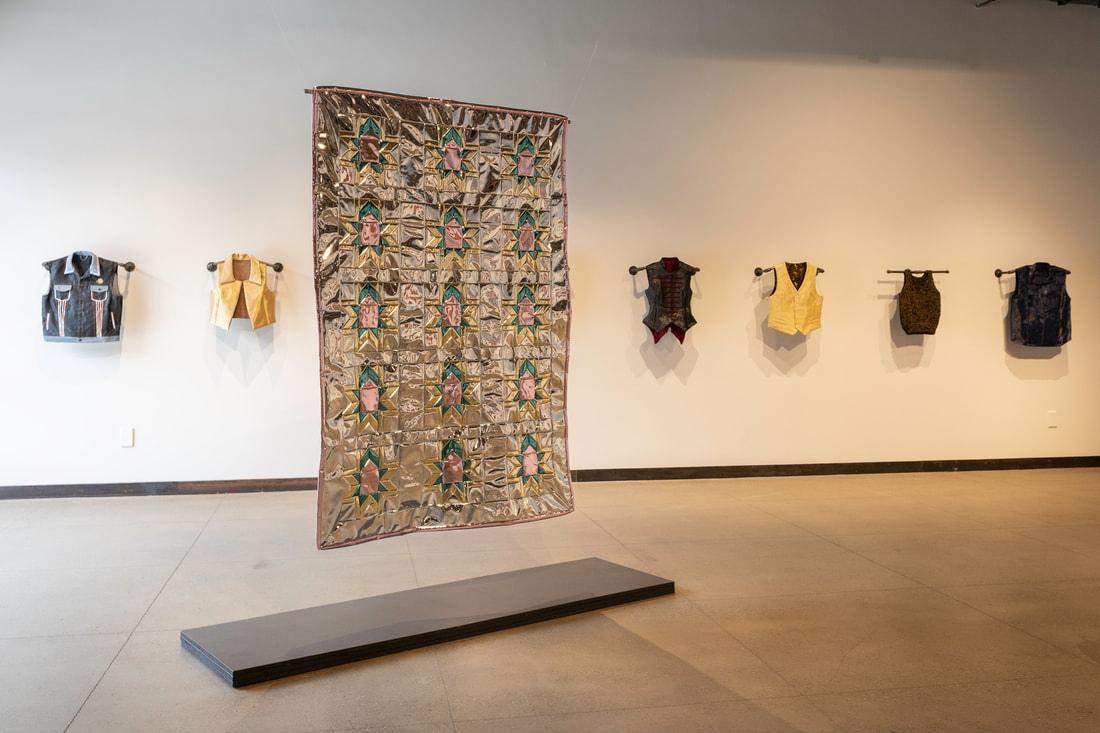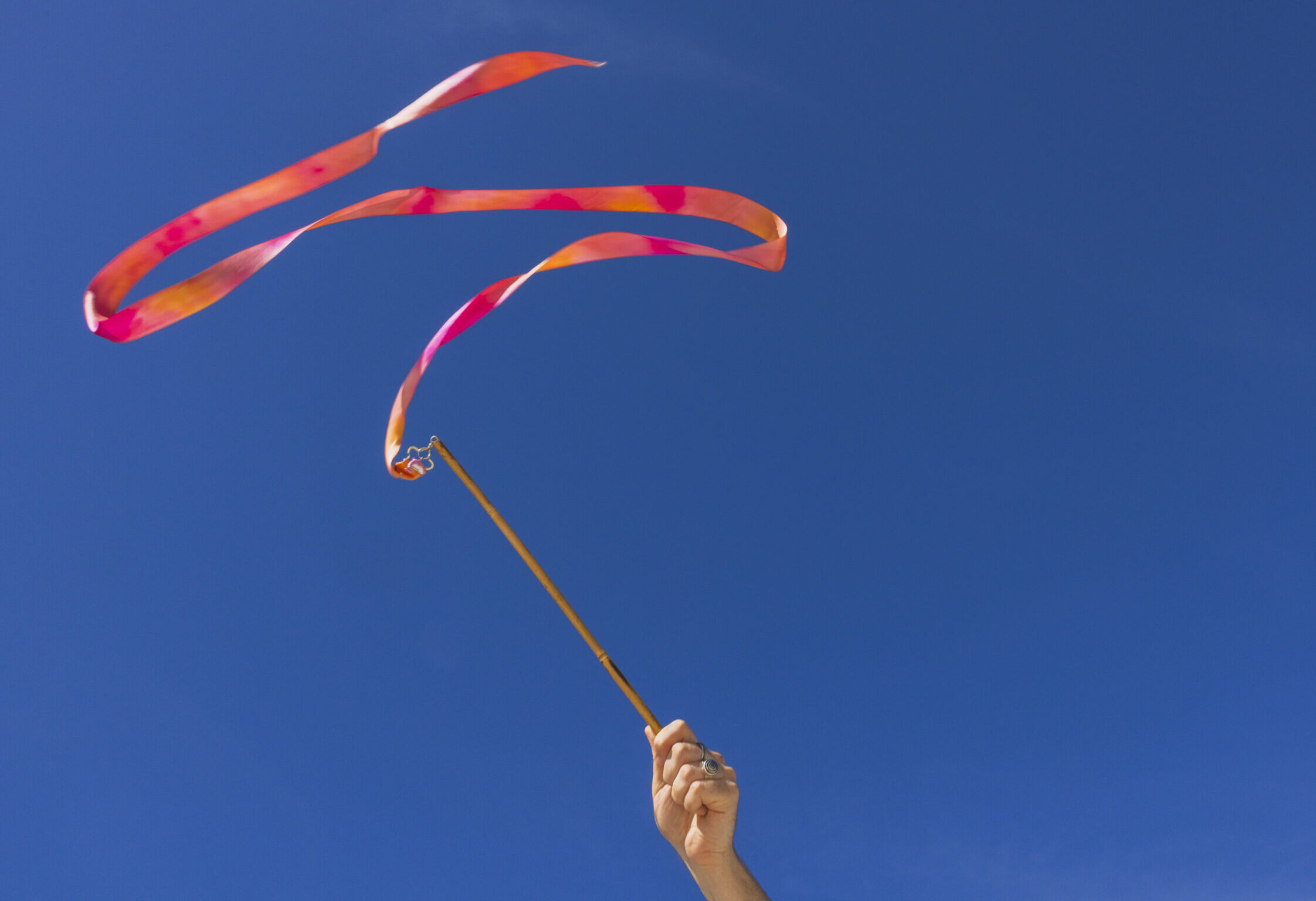

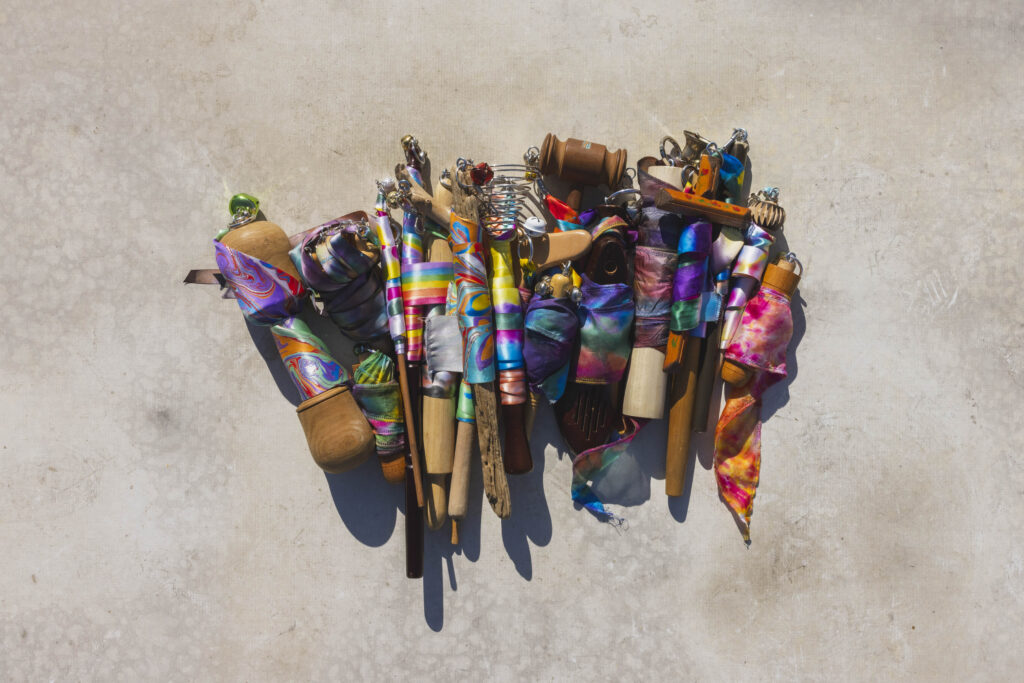
When you enter Wish, Fred Blauth’s solo exhibition for Bunker Projects, you are greeted by a simple proposition—there are dozens of wands hanging at eye-level, and you can play with all of them. Take them off the wall, whirl them around, intone your best incantation, and feel the way play makes the body possible.
It’s a delight to be in a gallery space where every piece can be encountered at the material level, and where each visitor is invited to participate in the collective magic of art instead of being relegated to an observer at a remove. “Activation” is the word that resonates with me in the space. Blauth has activated the latent magic in ordinary things, and now invites you to activate your body in collaboration with the work, which in turn energizes the gallery space. Fittingly, each piece has been given a verb as a name, encouraging you to Slither, Sprinkle, Cheer, Jiggle, Wiggle, and Giggle, and more.
Wish exemplifies the rich simplicity that’s possible when you’re repurposing the everyday objects that surround us—or, in Blauth’s words, “using what you have to make what you need.” Most of the wands are composed of only three primary parts: a wooden item, a bell, and a ribbon of hand-dyed fabric. Working in this mode, Blauth finds a way to mystify many mundane objects. Whisks, rolling pins, shoe stays, dowels, driftwood, chair legs, crucifixes, and more are pulled out of their expected contexts and infused with a charge of the possible. The sense of play is evident in the making as well as the presentation, as fabrics are marbled, splattered, and tie-dyed with dozens of colors. Do you think a whisk ever dreamed it would have the chance to wear such beautiful silks in its hair?
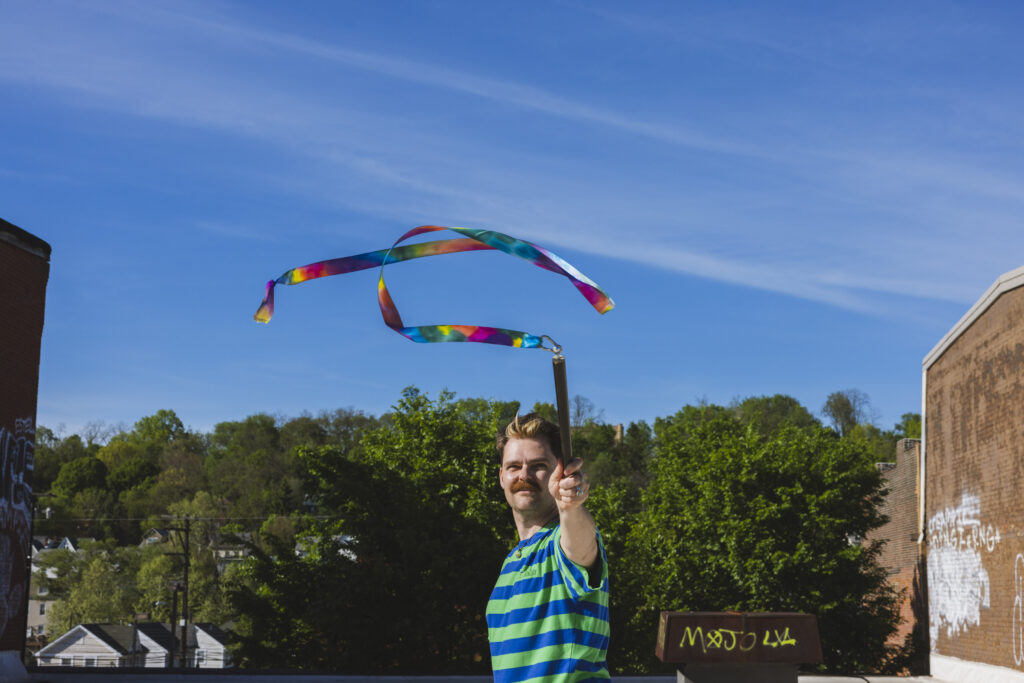
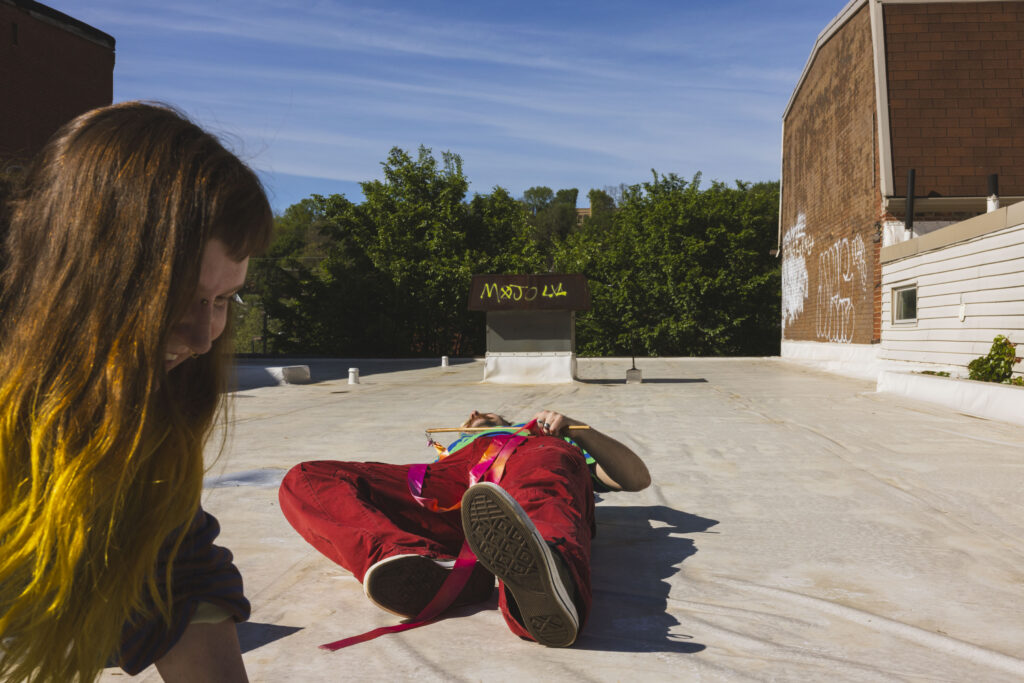
This is the challenge that curiosity extends—to see how varied materials feel in the hand, to study the way different lengths and weights of ribbon encounter the air. Blauth’s statement on the show is right—“your body knows” the proper motions. The lightest silks loft and flutter with the slightest flick of the wrist, almost possessed by a levity of their own, while the longer polyester ribbons need more momentum to trace their course in the air. It’s a delight to pick up each wand and learn how it wants to interact with you, to muse on the spells they might be best for. The single-ribbon Wack is lithe and decisive, while the twin ribbons of Sparkle cut a lazy track around my body, suited to something contemplative and meandering. Clack flops back and forth on its central hinge, perfect for casting a silly prank on a friend, while Thump is authoritative in the hand, cut out for heavy-duty magic-making.
As you encounter the wands at the material level, you’re also experiencing them at the sonic level, the bell attached to each piece filling the gallery with the sound of play. The 12 bells of Jingle goad the saturnine silk in its slow turn about the room, while the pink dolphin on Blush chirps to its creamsicle-magenta ribbon, and the glittery bell on Boop seems to celebrate with you. There are tarnished bells and shiny bells and one large smiley face bell, and each feels made for its piece, ready to make sound for the sake of it, to turn the gallery into a ringing, jingling, resounding space.
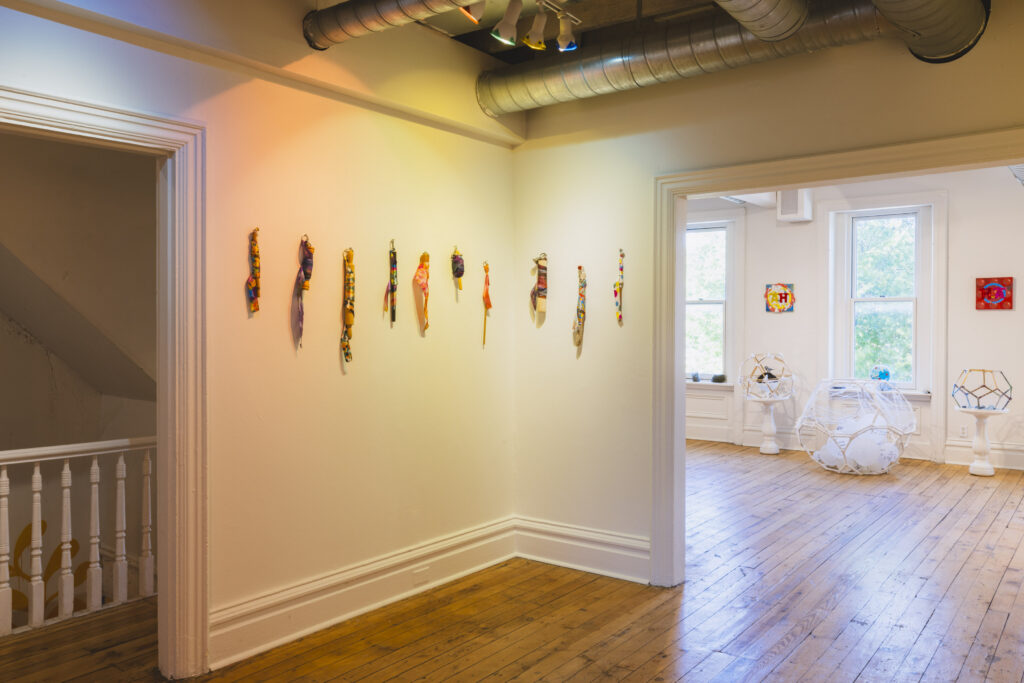
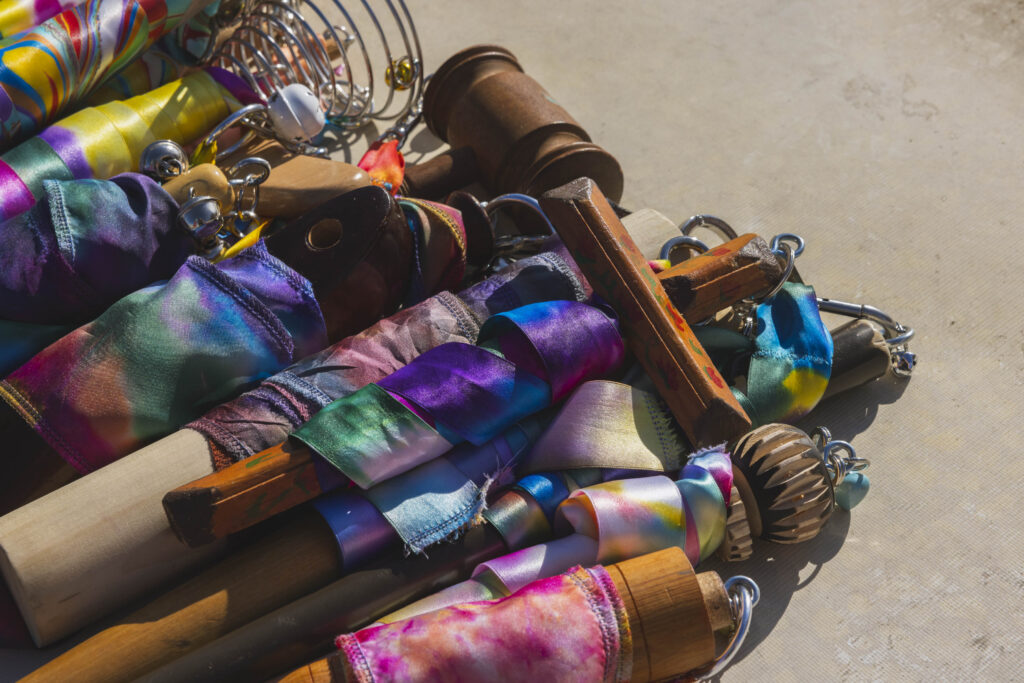
The spirit of the show is also suffused with a winking sense of the sensual, a reminder that play can inhabit many forms. Take Thwack, a modified back massager with eyelets screwed into each wooden nub, trailing 13 strands of nylon. The fabric in this piece hangs heavier than its silken neighbors, and the deep seductive purples and pinks immediately suggest something tentacular and forbidden. Then there’s the obvious fact that it looks like a cat-o-nine-tails flogger, the luxurious care of a massager repurposed into something with a bit more bite. And of course, many of the objects in the show embody queer materiality by conjuring resonance with a seminal gay experience—putting something up your butt that doesn’t normally go there, or, to return to Blauth, “using what you have to make what you need.”
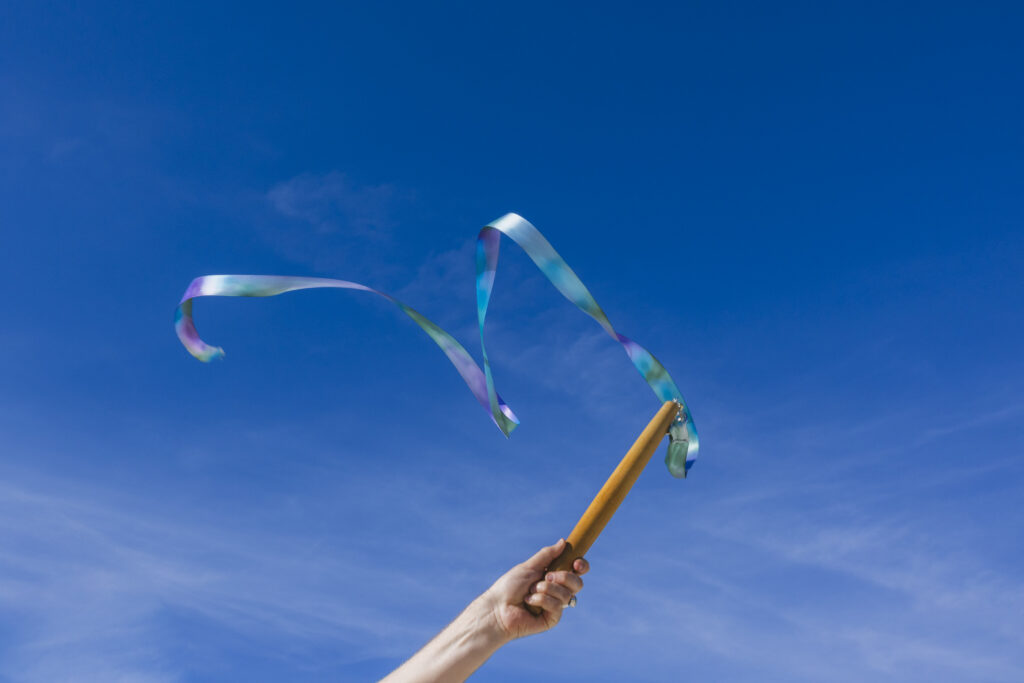
The day that I visit the gallery, I am purposeful, intent on writing a good review, studiously examining the wands from my seat in the corner. I have just received the most disappointing news of my year so far. The notes won’t cohere—found object kink; awakened latent properties; kinetics of play; queering the domestic. I am working from a cerebral place, rigid and bitter, distanced from the room. Then I remember the call at the center of the show—a wand, a want, a wish. I grab the piece that calls to me most—Swirl, a slim rod with a single strip of tie-dye silk—and I channel all of my tension and fear into the motion. I let my arm find the rhythm it wants, carve a circle in the air around me, feel the extent I inhabit. I grab another, Twist, its long ribbon dappled with springtime colors, and swish, scribble, scrawl, casting a spell of protection and possibility. I close my eyes and make a world.
On my way back home, I see a rusted T-post trailing a nylon cord in a patch of abandoned asphalt. All it needs is a bell, and the magic is ready.
Photography by Chris Uhren
Izzy Knapp is a writer and artist from the Midwest. Their most recent work is To the Outward Flowering You Made of Me, a poem for four speakers. They hold an MA in English and an MFA in poetry. You can find them online @entered_to_win